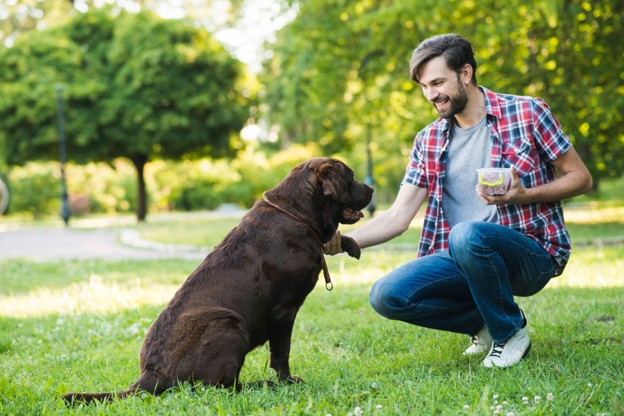
Early training progress can make it tempting to relax household rules almost immediately. Marissa Corbett explains why dogs often benefit when their freedom increases gradually as they establish reliable behaviors.
A dog that follows expectations for several days may appear ready for unrestricted access around the home, longer periods without supervision, or greater independence outdoors. However, early success does not always mean a behavior has become a dependable habit. Expanding freedom in manageable stages can give dogs more opportunities to succeed while reducing situations in which unwanted behaviors return.
Early Improvement Is Not the Same as Reliability
Dogs can make noticeable progress relatively quickly when routines are predictable.
A dog may begin waiting at doors, settling in a designated area, leaving household objects alone, or responding consistently to familiar cues. Those improvements are encouraging, but reliability develops through repetition.
The real test comes when circumstances change.
Will the same behavior continue when visitors arrive? What happens when food is left within reach? Can the dog remain settled when the owner is occupied elsewhere?
A few successful repetitions demonstrate progress. Consistent behavior across different situations provides stronger evidence that the dog is ready for additional independence.
Freedom Can Introduce New Training Challenges
Giving a dog more access changes the environment.
A dog previously supervised in one part of the home may suddenly have access to several rooms containing shoes, food, furniture, trash cans, or other interesting objects.
Each new area introduces opportunities to make choices.
If the dog has not yet learned what is expected in those spaces, unwanted behavior may be practiced repeatedly before anyone notices.
Management can prevent this problem while training develops. Gates, closed doors, leashes where appropriate, crates used responsibly, and supervised access can limit opportunities to rehearse behaviors owners are trying to prevent.
Structure is not intended to remain permanent. It helps create a manageable environment while habits are still developing.
Dogs Learn From What They Repeatedly Practice
Training does not occur only during formal sessions.
Dogs are learning throughout ordinary daily life.
If a dog repeatedly grabs food from an unattended counter and succeeds, that experience can strengthen the behavior. If pulling toward something interesting consistently gets the dog closer, pulling may become more likely.
The same principle can work in the desired direction.
Repeatedly settling calmly, waiting appropriately, responding to cues, and choosing acceptable objects creates practice with behaviors owners want to maintain.
This is one reason controlling access during early training can be valuable. It reduces opportunities for unwanted habits to become rewarding through repetition.
Household Boundaries Should Remain Predictable
Dogs generally benefit from clear expectations.
Problems can develop when boundaries change constantly depending on who is present or how busy the household happens to be.
For example, if jumping onto certain furniture is discouraged, allowing it occasionally without a clear distinction may make the expectation difficult to understand. The same can apply to waiting at doors, accessing particular rooms, or interacting around meals.
Consistency does not require an overly rigid household.
It means making expectations understandable enough that the dog has a reasonable opportunity to learn them.
Everyone regularly interacting with the dog should ideally understand the basic rules being reinforced.
Add Freedom in Small Steps
Moving from close supervision to complete independence is a large jump.
Smaller stages can make the transition easier.
A dog might first receive supervised access to another room. Once behavior remains reliable there, the owner could allow brief periods of greater independence while remaining nearby.
The progression may look different for every household, but useful steps can include:
- Expanding access to one area at a time.
- Increasing unsupervised periods gradually.
- Continuing to reinforce established household behaviors.
- Returning temporarily to more structure after setbacks.
- Adjusting freedom according to the dog’s demonstrated reliability.
The objective is not to follow a fixed schedule.
Freedom should reflect what the individual dog is prepared to manage successfully.
Reinforcement Should Not Disappear After Initial Success
A common training mistake is providing frequent reinforcement while teaching a behavior and then stopping completely once the dog begins responding.
Established behaviors still benefit from positive outcomes.
Reinforcement does not always have to mean food. Depending on the situation, praise, play, access to something enjoyable, attention, or another appropriate reward can help maintain desired behavior.
As a behavior becomes stronger, reinforcement may become less frequent or more naturally integrated into daily routines.
What matters is avoiding the assumption that a dog no longer needs feedback simply because early progress has occurred.
Adolescence Can Change Behavior
Training progress is not always linear.
A dog that appeared highly responsive earlier may become more distracted or independent during another stage of development. New interests can compete with previously established routines.
Owners may interpret this change as deliberate disobedience.
Instead of assuming everything previously taught has been lost, it can be useful to temporarily increase structure and reinforce familiar expectations again.
Training should respond to the dog currently in front of the owner rather than the dog that was performing perfectly several weeks earlier.
Professional resources such as AB Dog Training can also help owners determine how training and household structure can be adapted as a dog’s behavior and needs develop.
More Freedom Should Follow Demonstrated Behavior
Age alone does not determine whether a dog is ready for additional independence.
Two dogs of similar ages may have very different levels of reliability.
Rather than expanding privileges according to a calendar, owners can seek practical evidence.
Can the dog settle without constant intervention? Does the dog generally leave inappropriate household items alone? Are house-training habits reliable? Can familiar boundaries be followed even when something interesting is happening?
These observations provide more useful information than simply deciding that enough time has passed.
Setbacks Do Not Mean Starting Over
Even a well-trained dog can make mistakes.
A setback after receiving more freedom does not necessarily mean the entire training process has failed.
It may simply indicate that the progression moved too quickly.
If unwanted behaviors begin appearing more frequently, reducing freedom temporarily can create an opportunity to rebuild consistency.
Owners can then practice the relevant behavior, improve management, and try expanding independence again later.
This approach treats setbacks as information.
The dog is showing where additional practice may be needed.
Structure Can Support Safety
Gradual freedom is not only about protecting furniture or maintaining household rules.
In some situations, structure has an important safety function.
A dog with unreliable recall should not have unrestricted freedom in an unsecured outdoor environment simply because recall works inside the house. Similarly, a dog that frequently grabs unsafe objects may need continued supervision in spaces where those objects are accessible.
Management and training can work together.
Owners can prevent avoidable risks while gradually teaching the behaviors that may allow greater independence later.
Freedom Should Eventually Make Life Easier
The goal of structure is not constant control.
Ideally, effective training makes everyday life more flexible.
A dog that has practiced appropriate household behavior can eventually require less supervision. Reliable responses can make walks, visitors, travel, and ordinary routines easier to manage.
The path toward that independence is often more successful when you gradually earn freedom rather than introduce it all at once.
Small increases help owners see what the dog can handle and make adjustments before unwanted patterns develop.
Final Thoughts
Giving dogs freedom is an important part of helping them become comfortable and confident members of a household. The timing of that freedom matters.
Early progress can be encouraging without yet being fully reliable.
By maintaining clear boundaries, expanding access gradually, continuing reinforcement, and responding constructively to setbacks, owners can help dogs develop habits that remain dependable even as supervision decreases.
Greater independence works best when it follows demonstrated readiness.
Rather than viewing structure and freedom as opposites, owners can see them as connected stages of the same training process. Thoughtful structure creates opportunities for successful practice, and successful practice gradually creates the reliability that makes greater freedom possible.