Marissa Corbett
About Marissa Corbett of Shamong, NJ
Marissa Corbett of Shamong, New Jersey, is an experienced dog training professional and the founder of Above and Beyond Dog Training, serving families throughout South Jersey. Her work focuses on helping dogs and their owners build stronger relationships through effective communication, consistent training, and a better understanding of canine behavior. Marissa began her journey in dog training as a student with a large training company in South Jersey, where she developed a foundation in training methods and behavioral management. Eager to expand her expertise, she later attended Dog E-cademy in Hazel Green, Wisconsin, gaining additional hands-on experience and learning from established professionals in the field.
Through Above and Beyond Dog Training, Marissa provides customized training solutions designed around the individual needs of each dog and family. Her approach emphasizes humane, practical methods that can help address behavioral challenges, reinforce positive habits, improve social skills, and create safer, more enjoyable interactions between pets and their owners. Marissa believes successful dog training extends beyond teaching basic commands. By helping owners better understand how their dogs communicate and respond to different situations, training can establish trust, encourage consistency, and provide valuable skills that support everyday life. In addition to her knowledge of canine behavior, Marissa Corbett brings experience in entrepreneurship, program development, team building, and marketing to her work. She is also passionate about pet wellness, responsible ownership, and supporting her local community. Through her continued work in South Jersey, Marissa remains committed to giving pet owners the knowledge and tools they need to create positive, lasting relationships with their dogs.
Marissa Corbett Explores The Importance of Setting Realistic Expectations for Your Dog
Bringing a dog into your life often comes with a long list of hopes and expectations. Owners may picture relaxed walks around the neighborhood, calm greetings when visitors arrive, reliable responses to commands, and a dog that feels comfortable in a variety of social settings. Training can certainly help dogs develop important skills, but successful training begins with recognizing that every dog is an individual.
Dogs learn at different rates and respond to the world in different ways. Age, previous experiences, temperament, environment, health, and familiarity with training can all influence how quickly a dog develops a particular skill. For owners, setting realistic expectations is an important part of creating a productive training experience. Marissa Corbett explains that rather than expecting immediate perfection, it can be more useful to focus on gradual, sustainable progress. Understanding the individual dog in front of you can help establish appropriate goals while making training more positive for everyone involved.
Age Can Influence the Learning Process
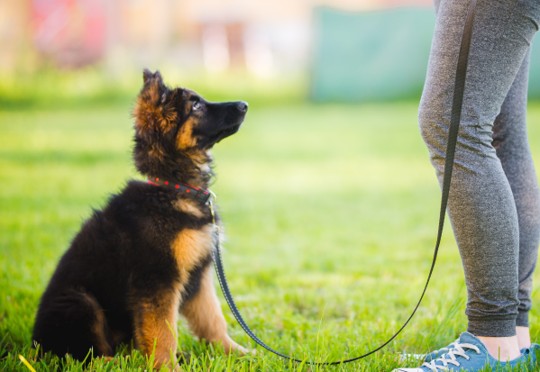
A dog’s age is one of the first factors to consider when establishing training expectations. Puppies, adolescents, adults, and senior dogs can all learn, but their needs and challenges may be very different. Puppies are encountering many experiences for the first time. In addition to learning basic cues and household expectations, they are becoming familiar with new people, sounds, surfaces, environments, routines, and boundaries. Marissa Corbett understands that their attention spans may also be limited. Expecting a young puppy to remain focused for a lengthy training session or behave like a mature, experienced dog can lead to unnecessary frustration.
Short, manageable training sessions are often more appropriate. A puppy that can focus for a few minutes, successfully respond to a basic cue, or remain calm during a new experience may be making meaningful progress even if there is still considerable work ahead. Adolescent dogs can present a different set of challenges. Increased energy, curiosity, and distraction can sometimes make previously learned behaviors appear less reliable. Continued consistency during this period can help reinforce expectations as the dog matures. Older dogs should not automatically be considered unable to learn. Adult and senior dogs can develop new skills, although established habits or physical limitations may need to be considered. The goal should be to work with the dog’s current abilities rather than comparing the dog to an arbitrary standard.
Previous Experience Matters
Two dogs of the same age and breed can have dramatically different backgrounds. One may have lived in a home since puppyhood, experienced regular training, met many different people, and visited a variety of environments. Another may have had limited social experiences or an unknown history before joining its current family. Marissa Corbett explains that those dogs cannot necessarily be expected to respond to training in the same way.
Previous experiences can influence how comfortable a dog feels around strangers, other animals, vehicles, household noises, unfamiliar locations, or particular types of handling. Even seemingly ordinary situations can be completely new to a dog. Owners should therefore avoid assuming that a dog “should know better” when it has never been taught what to do in a particular situation. Dogs need opportunities to learn which behaviors are expected of them. Understanding where a dog is starting allows owners to establish goals based on the animal’s actual experience rather than assumptions about where it should already be.
Temperament Makes Every Dog Different
Individual temperament is another important consideration. Some dogs are naturally outgoing and eager to investigate unfamiliar situations. Others may be cautious, independent, highly energetic, sensitive, easily distracted, or more interested in their surroundings than interacting with people.
These differences do not necessarily mean that one dog is better trained or more capable than another. They simply mean that training may need to be approached differently.
For example, a confident dog may quickly enter a busy environment without hesitation, while a more cautious dog may need additional time and gradual exposure before feeling comfortable. Expecting both dogs to reach the same goal on the same schedule overlooks an important part of their individuality. Temperament can also influence motivation. What captures one dog’s attention may have little effect on another. Marissa Corbett understands that successful training often involves discovering what motivates the individual dog and adjusting the process accordingly. Owners who understand their dog’s temperament can create goals that are challenging enough to encourage growth without asking for too much too quickly.
Environment Can Change Behavior
One of the most common sources of unrealistic expectations is assuming that a behavior learned in one environment will immediately transfer to every other situation. A dog may respond perfectly to a cue in a quiet living room but struggle with the same request on a busy sidewalk. That does not necessarily mean the dog has forgotten its training. The second environment contains far more distractions. There may be unfamiliar people, dogs, traffic, smells, noises, wildlife, or other sources of excitement competing for the dog’s attention.
Training in increasingly distracting environments can help dogs learn to perform familiar behaviors under different circumstances. However, owners should recognize that difficulty naturally increases as distractions increase. This is why training often works best as a gradual process. A dog might first learn a skill inside the home, then practice it in the backyard, followed by a quiet outdoor area and eventually a busier public setting. Breaking a larger objective into smaller steps gives the dog opportunities to succeed while progressively building reliability.
Progress Is Not Always a Straight Line
Training progress can fluctuate. A dog may perform exceptionally well one day and struggle with the same exercise the next. Changes in environment, energy level, distractions, routine, or excitement can all affect performance. Marissa Corbett explains that this is one reason owners should look at improvement over time rather than judging success based on a single training session.
Progress can also appear in subtle ways. Consider a dog that becomes overly excited whenever visitors arrive. An owner may initially define success as having the dog remain completely calm throughout the entire visit. That may eventually be possible, but expecting it immediately could make smaller improvements easy to overlook. Perhaps the dog initially takes ten minutes to settle but eventually settles after five. Maybe it becomes easier to redirect the dog’s attention or the dog can remain calm while a visitor enters before becoming excited. These smaller changes can represent meaningful steps toward the larger goal. Recognizing incremental improvement helps owners maintain realistic expectations and understand that successful training is often cumulative.
Avoid Comparing Your Dog to Other Dogs
Comparisons can make realistic expectations particularly difficult. Owners may see another dog walking calmly through a crowded park, responding instantly to recall, or relaxing peacefully at an outdoor restaurant and wonder why their own dog cannot do the same. What they usually cannot see is everything that contributed to that behavior. The other dog may have years of training experience. It may have a naturally calm temperament, extensive socialization, or familiarity with that particular environment. Comparing the finished result to another dog’s early training process provides little useful information.
Marissa Corbett explains that a more productive measurement is the dog’s own previous behavior. Is the dog more responsive than it was several weeks ago? Can it remain focused for longer periods? Has it become more comfortable in situations that once caused difficulty? Are certain everyday routines becoming easier? Those comparisons provide a much clearer picture of genuine progress.
Clear Goals Help Owners Stay Consistent
Realistic expectations do not mean avoiding ambitious goals. Instead, they involve breaking those goals into achievable steps. An owner who wants a dog to walk politely through a crowded downtown area might begin by practicing basic leash skills somewhere quiet. Once the dog demonstrates greater consistency, mild distractions can be introduced. Gradually, training can move into more challenging environments.
Specific goals can also make progress easier to evaluate. “I want my dog to behave better” is difficult to measure. “I want my dog to wait calmly while I attach the leash” is much clearer. Small, specific objectives give owners something concrete to practice and allow them to recognize improvement as it happens.
Training Is About Building Skills, Not Achieving Perfection
Perhaps the most important expectation to reconsider is the idea of a perfectly trained dog. Dogs are living animals, not machines. They can become distracted, excited, tired, uncertain, or overwhelmed. Even well-trained dogs may occasionally make mistakes. Training is better understood as an ongoing process of communication and skill development. Owners can support that process by remaining consistent, paying attention to their dog’s individual needs, and adjusting expectations when circumstances change. A goal that is appropriate for one dog may not be appropriate for another, and the amount of time required to reach that goal can vary considerably.
Ultimately, realistic expectations benefit both dogs and their owners. Marissa Corbett emphasizes that they reduce unnecessary frustration, make it easier to recognize meaningful improvement, and encourage training goals based on the individual animal rather than comparisons or arbitrary timelines. When owners consider age, experience, temperament, and environment, they can create a training process that meets their dog where it is today while continuing to work toward where they would like it to be. Progress may happen gradually, and the path may not always be perfectly smooth. But with appropriate expectations, consistency, and patience, even small improvements can become important steps toward a safer, more confident, and more rewarding relationship between a dog and its family.